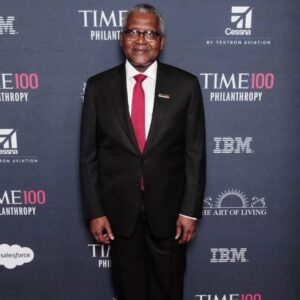
When people talk about wealth in Africa, one name almost always dominates the conversation: Aliko Dangote. For more than a decade, Dangote has held the crown as the richest Black man in the world, a title that puts him not only at the top of Nigeria’s economic elite but also on the global stage of billionaires. With a fortune built on cement, sugar, flour, salt, and most recently oil, Dangote has shaped African industries in ways few entrepreneurs have ever managed.
But Dangote is more than just a billionaire. He is a symbol of possibility in a continent too often portrayed as dependent on aid. For Africans and the diaspora, his story demonstrates that with vision, discipline, and persistence, it is possible to create not only wealth but also lasting impact. Today, his net worth regularly crosses $15 billion, making him wealthier than entire African economies. His empire—Dangote Group—employs tens of thousands and has operations in over a dozen African countries.
And yet, despite his massive influence, Dangote maintains a surprising simplicity. He lives in Nigeria rather than permanently abroad, avoids flamboyant spending sprees, and dedicates significant energy to philanthropy. His life is a study in balance: the luxury of immense wealth combined with the humility of a man who often describes himself as a “disciplined trader.”
Aliko Dangote was born on April 10, 1957, in Kano State, one of northern Nigeria’s most historically significant and wealthy regions. He was born into privilege, but not the kind that guaranteed instant success. His grandfather, Sanusi Dantata, was one of the richest men in West Africa at the time, a powerful trader in groundnuts (peanuts) and other commodities. Dangote grew up surrounded by the language of commerce, the movement of goods, and the rhythm of markets.
Even as a child, stories say Dangote displayed unusual business instincts. He would buy sweets in bulk and resell them to his classmates at school, turning a profit long before he learned what “profit margins” meant. Those early experiments in trade were not only cute anecdotes but the seeds of an empire.
Dangote received his early education in Kano before moving on to study business administration at Al-Azhar University in Cairo, Egypt. His time in Cairo was formative: he gained exposure to global trade dynamics and a broader understanding of economics. Unlike many young elites who might have pursued careers in politics or government, Dangote was determined to become a businessman.
He returned to Nigeria in the late 1970s with both knowledge and ambition. His family connections gave him a safety net, but Dangote had no intention of living off inherited wealth. He wanted to build something that was uniquely his.
The influence of his grandfather cannot be overstated. Sanusi Dantata was not just a rich man; he was a visionary trader whose empire helped shape northern Nigeria’s economy. Dangote has often credited him with teaching the discipline of trade—how to calculate risks, how to negotiate, and how to value relationships.
In many ways, Dangote’s story mirrors the idea of standing on the shoulders of giants. With his grandfather’s mentorship, his family’s modest financial support, and his own relentless drive, Dangote was well-positioned to take his first steps into serious business.
The Road to Business – From Trading to Manufacturing
In 1977, with a loan of about $3,000 from his uncle, Dangote officially started his business journey. It was a modest sum compared to the empire he would later command, but it was enough to get him into commodity trading. His early focus was on products Nigerians consumed daily: sugar, rice, and cement.
Nigeria in the late 1970s and early 1980s was a complex business environment. On one hand, it was a nation with enormous potential—Africa’s most populous country with a hungry consumer market. On the other, it was plagued by political instability, military coups, and poor infrastructure. Many entrepreneurs would have hesitated, but Dangote saw opportunity where others saw chaos.
He imported rice from Thailand and sugar from Brazil, selling them at competitive prices in Nigeria. Soon, he was trading cement as well, capitalizing on the country’s rapid urbanization. By the 1980s, his trading business had grown significantly, and the Dangote Group was born.
Founding of Dangote Group
Initially, Dangote Group was primarily a trading firm—an import-and-sell business. But Dangote was ambitious. He understood that as long as he depended on imports, his profits would always be limited by global price swings and shipping costs. The real wealth, he realized, lay in manufacturing.
This insight marked a turning point. While many Nigerian businesses remained focused on imports, Dangote decided to produce locally. He reinvested his trading profits into building factories, starting with sugar and flour mills, before turning his attention to what would become the cornerstone of his empire: cement manufacturing.
Shift to Large-Scale Manufacturing
The shift to manufacturing was bold. Building factories in Nigeria wasn’t easy—there were frequent power outages, inconsistent government policies, and infrastructure bottlenecks. But Dangote’s strategy was long-term. He believed that controlling production would not only give him better profit margins but also allow him to dominate the market.
By the late 1990s and early 2000s, Dangote had begun constructing cement plants. His timing couldn’t have been better. Nigeria was undergoing rapid urbanization, with cities expanding and infrastructure projects booming. Cement demand skyrocketed, and Dangote was ready to supply it.
Dangote Cement – The Foundation of a Fortune
If there’s one product that defines Aliko Dangote’s empire, it is cement. Cement is the backbone of infrastructure—roads, bridges, homes, offices—and Africa’s need for it was massive. Prior to Dangote’s entry, much of the cement used in Nigeria was imported at high costs.
Dangote turned this dependency into an opportunity. He invested billions into building state-of-the-art cement plants, ensuring local production on an unprecedented scale. His first major breakthrough came with the Obajana Cement Plant in Kogi State, which became one of the largest in the world.
Today, Dangote Cement produces over 45 million tonnes annually and operates across more than 10 African countries, including Ghana, Ethiopia, Senegal, Tanzania, and Zambia. By creating economies of scale, Dangote didn’t just dominate Nigeria’s cement market—he reshaped the cement industry across the entire continent.
Expansion Across Multiple African Countries
Dangote’s strategy was simple but powerful: wherever infrastructure is needed, cement will be in demand. He expanded his plants into countries where governments were investing heavily in housing and roads. This made him not just a Nigerian billionaire but a pan-African industrialist.
His cement plants often provided thousands of jobs, boosted local economies, and reduced reliance on expensive imports. In some countries, Dangote Cement even became the single most important player in the construction sector.
Market Dominance and Billionaire Status
It was cement that pushed Dangote into the billionaire league. By 2008, he had become the richest man in Nigeria. By 2011, Forbes declared him the richest man in Africa. For over a decade, he has held this position, with his wealth fluctuating between $10 billion and $20 billion, depending on market conditions.
Dangote Cement alone accounts for more than 80% of his net worth. It’s not just a company; it’s the engine of his empire. He has consistently reinvested profits into expanding the business, ensuring it remains a monopoly in Nigeria and a dominant force across Africa.
Dangote Sugar, Flour, and Salt
Although cement is the crown jewel of his empire, Dangote’s business interests extend far beyond it. His companies produce products that end up in almost every Nigerian household.
- Dangote Sugar Refinery: One of the largest in Africa, refining over 4 million tonnes annually. From cups of tea to soft drinks, Dangote sugar sweetens millions of lives every day.
- Dangote Flour Mills: Producing flour, pasta, and noodles, it became a dominant force in Nigeria’s food sector before he later divested part of the business.
- Dangote Salt: A necessity in every kitchen, ensuring the Dangote brand is as common in homes as it is in construction sites.
This diversified portfolio has been key to Dangote’s resilience. When one sector faces challenges, another often cushions the impact. It also shows his sharp instinct: investing not in luxuries, but in basic commodities that people cannot live without.
Oil and Gas Ventures – The Dangote Refinery
Perhaps the most ambitious project of Dangote’s career is the Dangote Petroleum Refinery and Petrochemical Complex, located in Lagos, Nigeria. Valued at over $20 billion, it is the largest single-train oil refinery in the world.
Nigeria is Africa’s biggest oil producer, yet for decades it relied on importing refined petroleum products due to the inefficiency of its state-owned refineries. Dangote saw this paradox and decided to solve it. His refinery aims to produce 650,000 barrels per day, enough not only to satisfy Nigeria’s domestic needs but also to export refined products across Africa.
This project was not easy. It faced financing delays, construction hurdles, and logistical nightmares, but Dangote persisted. The refinery is expected to save Nigeria billions in foreign exchange annually and could even turn the country into a net exporter of refined fuel. If successful, it will cement Dangote’s reputation not just as a billionaire, but as a nation-builder.
Real Estate, Banking, and Global Investments
Beyond Africa, Dangote has invested in real estate, banking, and global stocks. He has held shares in international companies and has cultivated relationships with some of the world’s most powerful business leaders, from Bill Gates to Warren Buffett. These networks have not only enhanced his business credibility but also positioned him as a bridge between Africa and the rest of the world.
The Dangote Refinery – Africa’s Game Changer
The Dangote Refinery deserves special mention because of its transformational impact. Once fully operational, it will:
- End Nigeria’s reliance on imported fuel.
- Create thousands of jobs.
- Reduce Africa’s exposure to global fuel price volatility.
- Strengthen Nigeria’s currency by cutting fuel import bills.
Critics argue that the refinery could give Dangote too much power, creating a near-monopoly in the energy sector. But supporters counter that without private sector players like him, Africa would remain trapped in dependency.
Whichever side one takes, there is no doubt: the refinery is a landmark project that may redefine Africa’s energy landscape for decades.
Aliko Dangote’s net worth has fluctuated with the stock market and currency changes in Nigeria, but he consistently ranks as Africa’s richest man. In 2023, Forbes estimated his fortune at around $13.5 billion, though Bloomberg often places it higher.
Despite this staggering wealth, Dangote is not known for extravagant public displays. Unlike some billionaires who flaunt their riches, he has a reputation for being modest and private.
Homes, Private Jets, and Luxury Assets
That said, Dangote does live a life of comfort. His known assets include:
- A $30 million private jet, used for international travel.
- A luxury yacht often docked in Lagos.
- High-end homes in Lagos, Abuja, London, and other global cities.
- A fleet of cars, including a Maybach 57S, Bentley, and Rolls Royce.
Still, by billionaire standards, his lifestyle is relatively low-key. He rarely throws lavish parties, and when he spends, it is often on business ventures or philanthropy rather than indulgence.
His Minimalist Personal Habits
One of the most surprising aspects of Dangote’s life is his personal discipline. He is known to:
- Wake up very early and maintain strict work routines.
- Eat simple meals, often preferring local Nigerian food.
- Avoid alcohol and live relatively quietly compared to his peers.
In interviews, Dangote has often said his greatest joy is not luxury but building businesses and creating jobs. For him, wealth is a tool for influence and legacy, not just comfort.
 i
i
Dangote Foundation – Health, Education, Poverty Alleviation
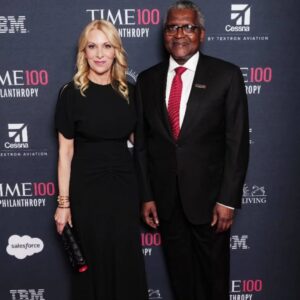
Beyond business, Dangote has poured billions into philanthropy. Through the Aliko Dangote Foundation (ADF), he has supported health, education, and poverty eradication programs across Africa. His foundation is the largest private charitable foundation in Africa, with an endowment of over $1.25 billion.
- Health: Dangote has funded campaigns against polio, malaria, and malnutrition. During the Ebola crisis in West Africa, he provided millions of dollars in aid. When COVID-19 struck, he donated testing kits, built isolation centers, and provided relief materials.
- Education: He has funded scholarships, school renovations, and university programs, particularly in Nigeria.
- Poverty Alleviation: Through micro-grants to women and youth, Dangote has empowered thousands of small entrepreneurs.
Role in Fighting Pandemics
Dangote’s impact on public health has been significant. He works closely with global organizations like the Bill & Melinda Gates Foundation and the World Health Organization (WHO) to strengthen Africa’s health systems. His foundation’s focus on nutrition and maternal health aims to reduce childhood mortality rates and improve life expectancy across the continent.
Scholarships, Youth Empowerment, and Agriculture Initiatives
Dangote also believes in empowering the next generation. His agricultural investments create opportunities for young people in farming, food processing, and agribusiness. By investing in agriculture, he addresses not only unemployment but also Africa’s reliance on food imports.
Challenges, Criticism, and Controversies
Even billionaires are not free from criticism, and Dangote is no exception.
- Monopoly Accusations: Critics argue that Dangote’s dominance in cement and sugar leaves little room for competitors. In some markets, he controls such a large share that prices remain high.
- Government Connections and Politics: Dangote’s rise has been linked to his close ties with successive Nigerian governments. Some say his success is partly due to favorable policies and protectionist measures. Dangote counters that his risk-taking and investments speak for themselves.
- Economic Risks: Nigeria’s volatile currency, inflation, and energy shortages have often affected his companies. Dangote has had to constantly adapt to remain profitable.
Despite these criticisms, many acknowledge that Dangote’s ventures have created jobs and opportunities on a scale few others have matched.
Dangote has been married before but is currently divorced. His private life has often made headlines, especially regarding his romantic relationships, but he rarely addresses them publicly.
His Daughters and Family Legacy
He has three daughters—Mariyah, Fatimah, and Halima Dangote—who are increasingly involved in the family business. Halima, in particular, holds leadership roles within the Dangote Group, signaling that succession planning is underway.
Privacy, Rumors, and Media Stories
Though Africa’s most famous billionaire, Dangote fiercely guards his privacy. Rumors about his personal life often circulate in tabloids, but he remains focused on business, rarely indulging in gossip or public feuds.
While Dangote has never run for office, his influence in African politics is undeniable. Presidents, ministers, and policymakers regularly consult him on economic strategy. His success has made him a symbol of African capitalism, proving that Africans can create global corporations without relying solely on foreign aid or investors.
Dangote as Africa’s Economic Ambassador
Internationally, Dangote represents Africa in elite business circles. He attends World Economic Forum meetings in Davos and is often a speaker at major summits. His presence signals that Africa is not just a place of poverty and conflict, but also of innovation and prosperity.
Inspirational Figure for Entrepreneurs
To young Africans, Dangote is more than a businessman—he is a role model. His story is taught in schools, discussed in boardrooms, and quoted in motivational talks. His message is consistent: “Invest in what people cannot live without.”
As Dangote approaches his late 60s, the question of legacy looms large. The Dangote Group has been built around his vision and leadership, but its future depends on how well the next generation can carry the torch. His daughters and trusted executives are expected to play bigger roles in the coming years.
Succession Planning and Family Involvement
Succession planning is already visible, with Halima Dangote and others taking senior roles. However, maintaining such a vast empire will require not just family leadership but also professional management capable of competing in an increasingly globalized economy.
Impact on Africa’s Economic Independence
Dangote’s legacy will be defined by more than his billions. His investments in cement, sugar, agriculture, and energy aim to reduce Africa’s dependence on imports. If successful, his refinery alone could save Nigeria billions and strengthen Africa’s economic independence.
Aliko Dangote’s life is the ultimate African success story. Born into privilege but driven by vision, he transformed a small trading venture into a continental empire. From cement and sugar to oil and agriculture, he has built businesses that touch the daily lives of millions.
But beyond wealth, his story is about discipline, foresight, and persistence. Dangote proves that African entrepreneurs can compete on the global stage, not just as participants but as leaders. His refinery may yet redefine Africa’s energy future, while his philanthropy continues to change lives.
Dangote’s journey reminds us that wealth is not just about accumulation—it is about impact. And as Africa’s richest man, his impact will be felt for generations to come.