In September 2025, the global cycling community will witness a landmark event: the 98th edition of the UCI Road World Championships will be hosted in Kigali, Rwanda, marking the first time in over a century that the Championships take place on African soil.
This is more than just a change of venue. It is symbolic of the shifting dynamics of world cycling
opening up the terrain, the atmosphere, and the prestige of the “rainbow jerseys” to a continent long underrepresented in hosting the biggest events. From route design to prize money, amid logistical and budgetary challenges, Kigali 2025 promises to be decisive not only for individual riders but also for the global growth of the sport.
The UCI Road World Championships: An Overview
The UCI Road World Championships are annual road cycling competitions organized by the Union Cycliste Internationale (UCI),First contested for amateurs in 1921; by 1927 there were also races for professionals, Over time, the event has evolved: addition of women’s races (first in 1958), junior/U23 categories, mixed relays, and recently, standalone U23 women’s races beginning 2025.
Why Kigali, Rwanda?
Rwanda’s bid was chosen in 2021 during the UCI Congress. Candidate countries included other African nations like Morocco, South Africa, and Algeria,The decision aligns with UCI’s “Agenda 2022” and its goal of expanding cycling’s reach globally, including more representation in Africa,Rwanda already has strong credentials: a deepening cycling culture (e.g. through Tour du Rwanda), mountainous terrain well suited for challenging races, and growing infrastructure and international connections.
What’s New in 2025
- First World Championships held in Africa.
- Introduction of standalone Under-23 Women’s road race event (previously U23 women were simply the highest placed in elite).
- Route designs are unusually tough: high altitude (Kigali ≈ 1850 m above sea level), major climbs, demanding circuits. The men’s road race involves something like 5,475 meters of climbing over ~267.5 km; women’s also heavy climbing.
Event Structure and Routes
Schedule & Events
The Championships run from 21 to 28 September 2025. There are 13 events:
- Road Races (Elite Men, Elite Women, U23 Men, U23 Women, Junior Men, Junior Women) ,6 Individual Time Trials (same categories) ,1 Mixed Relay Team Time Trial.
Route Details
- Circuit: Many races use a Kigali circuit, about 15.1 km, starting/ending in Kigali’s convention centre. Various laps for different events; elite men also have extension including climbs such as Mont Kigali and Mur de Kigali.
- Climbing & Altitude: The terrain is very hilly; races involve substantial elevation gain. Example: men’s road race ~5,475 m over 267.5 km.
- These features make the event physically demanding and tactically complex, favoring riders with climbing ability, altitude acclimatization, and endurance.
Rewards: Prestige, Prizes, and Legacy
One of the most captivating aspects of the UCI Road World Championships lies in its rewards, which go far beyond the podium celebrations. At the heart of these honors is the rainbow jersey, a coveted garment awarded to the winner of each category. This jersey, worn for an entire year in the discipline where it was won, carries with it immense prestige. Even after the reign ends, champions retain the right to wear the rainbow bands on their sleeves for life — a permanent reminder of having reached the pinnacle of world cycling. Few achievements in sport resonate with such symbolism, making this one of the highest honors any rider can attain.
Beyond symbolic triumph, the Championships also shape world ranking points, fuel national pride, and frequently serve as career-defining moments, especially for younger athletes. For under-23 or junior riders, a strong performance in Kigali 2025 could mark the beginning of a professional career or open doors to contracts with top-tier teams. The Championships, therefore, are not merely about who crosses the line first, but about who seizes a lifelong platform to launch or cement their place in cycling history.
The financial dimension is equally important. The total prize pool for Kigali 2025 stands at approximately €124,250, equivalent to nearly Rwf 200 million. This money is distributed across categories, with the Elite Men’s and Women’s Individual Time Trial winners each receiving around €8,000, while second and third places earn about €4,000 and €2,000 respectively. Under-23 champions in time trials will take home about €4,000 each, while junior winners receive roughly €2,000, with smaller amounts awarded to the podium finishers. The road races, being the centerpiece of the event, command the lion’s share of this financial package.
Although these sums may appear modest compared to the millions earned in prestigious multi-stage races such as the Tour de France or Giro d’Italia, their value cannot be underestimated. For many junior and under-23 riders, and even for some national federations with limited resources, this prize money represents more than a reward — it can cover a season’s training expenses, travel costs, or even provide seed funding for future participation in professional tours.
But the rewards of Kigali 2025 extend far beyond euros. The Championships promise global media exposure, particularly because this is the first time the event is being staged in Africa. Riders who shine here may attract lucrative sponsorships or contracts, propelled by the novelty and attention of the setting. For Rwanda and Africa at large, the legacy will be profound: an unprecedented chance to showcase infrastructure improvements, cultivate a stronger cycling culture, attract tourists, and reposition the continent on the global sporting map.
In this way, the Kigali World Championships deliver a layered system of rewards. There is the prestige of the rainbow jersey, the tangible financial prizes, the career opportunities born of exposure, and the long-term legacy that will resonate not only with the athletes but also with the host nation and the entire continent.
Budget, Costs, and Logistical Considerations
Hosting the UCI Road World Championships is never a small undertaking. When the event arrives in Kigali in September 2025, it will carry with it not only the thrill of world-class racing but also significant financial and logistical commitments. For Rwanda, this represents both an opportunity to showcase itself on the global stage and a series of challenges that require careful planning, trade-offs, and long-term vision.
UCI Hosting Fee and Finances
One of the most notable aspects of Kigali 2025 is the financial arrangement between the Union Cycliste Internationale (UCI) and Rwanda’s Local Organising Committee (LOC). Unlike previous editions, the UCI accepted a reduced hosting fee, acknowledging Rwanda’s limited financial base compared to wealthier host nations in Europe or North America. This decision, though it means the UCI itself will likely incur a loss, has been framed as a deliberate investment in the sport’s global growth. By bringing the championships to Africa, the UCI hopes to expand cycling’s reach into new territories, promote inclusivity, and establish a lasting legacy beyond traditional strongholds. In this sense, Kigali 2025 is not just an event but a developmental project.
Costs for Participants and Federations
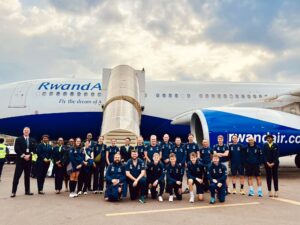
While the symbolic milestone is historic, the practical side reveals financial strain for many participants. The costs of travel, flights, freight for bicycles and equipment, visas, accommodation, and on-site logistics are significantly higher for federations located far from Rwanda, particularly those in the Americas, Asia, and Oceania. As a result, some nations have already trimmed their delegations, sending fewer riders than usual.
This burden weighs even heavier on junior and under-23 athletes, who often rely on partial or personal funding. For instance, USA Cycling has announced that unless riders secure full support through qualification, they may need to contribute up to several thousand dollars from their own pockets to attend. Such financial barriers threaten fairness and diversity, reducing the number of young talents who can showcase themselves on the global stage.
Budget for Organisers
For Rwanda’s organisers, the budget covers a wide range of upgrades and services to meet international standards. Infrastructure improvements include repaving roads, installing safety barriers, erecting clear signage, and ensuring medical readiness along the course. Race logistics such as electronic timing systems, accredited commissaires, and professional marshals also demand heavy investment.
Accommodation is another critical element. With hundreds of athletes, staff, media professionals, and fans descending on Kigali, the LOC has created booking systems to help national federations secure hotels, sometimes even offering subsidies or funding support.
Health and safety are top priorities in a region with high altitude and tropical health risks. Organisers and teams are implementing strict protocols, including vaccinations, malaria prevention, and water safety measures.
Transport and logistics present their own hurdles. International teams must clear their bicycles, spares, and other equipment through customs, a process requiring streamlined systems to avoid costly delays. Rwanda’s authorities have worked closely with the UCI to create tailored customs procedures and freight management solutions.
Finally, media and broadcasting form one of the most expensive and essential areas of the budget. Rwanda and the UCI will bear the costs of live production, commentary, and global television distribution. The stakes are high: millions of viewers around the world will watch Kigali 2025, making professional coverage crucial not only for the competition’s credibility but also for its financial returns through advertising and sponsorship.
Financial Risks and Budget Gaps
Despite detailed planning, risks remain. With the UCI reducing its hosting fee, more responsibility rests on Rwanda and its sponsors to cover costs. Should revenues from ticket sales, hospitality packages, sponsorship deals, or television rights fall short of expectations, deficits could appear.
Another risk is reduced participation. If some federations cannot afford to send full teams, the scale of the event diminishes, potentially lowering public interest and commercial appeal. Likewise, infrastructure upgrades may overrun their budgets, particularly in Kigali’s hilly and altitude-challenging environment.
Why This Matters
The stakes go far beyond cycling. Kigali 2025 is a symbolic milestone, the first time Africa hosts the World Championships. This enhances inclusivity in global sport and inspires a new generation of African cyclists. It also fosters infrastructure development, tourism, and international investment, with Rwanda standing to gain long-term benefits if it successfully delivers.
Moreover, Rwanda has positioned itself as a hub of stability and innovation in the region. Hosting such a prestigious event strengthens its global image as a peaceful, progressive nation capable of handling world-class events.
Challenges and Criticisms
Yet, criticism persists. The financial burden on athletes and federations raises questions of fairness, particularly when promising riders are excluded simply due to lack of funds. Concerns also exist regarding security and politics, as Rwanda borders areas of regional instability, though organisers continue to stress that safety measures are robust.
There are also environmental and logistical concerns: Kigali’s high altitude could test athletes’ health, traffic congestion may strain city infrastructure, and questions remain about whether Rwanda’s accommodation capacity will suffice. Finally, there is the issue of legacy risk — if investment and enthusiasm are not sustained after 2025, the infrastructure and momentum could quickly fade.
What to Watch
As the Championships draw near, several storylines will be worth following closely:
- How riders adapt to the altitude and punishing climbs of Kigali.
- Whether reduced participation from some federations alters the competitiveness of the event.
- If prize money and exposure create new sponsorships and opportunities for African cyclists.
- How global viewership responds to the novelty of an African host and whether this translates into revenue growth.
- And, most importantly, whether Rwanda maintains and leverages its new infrastructure and reputation after 2025.
The 2025 UCI Road World Championships in Kigali represent much more than a cycling competition: they are a statement about the growth of sport, global inclusion, and the power of ambition. While challenges are real — logistics, cost burdens, safety, risk of financial overrun — if executed well, this event could produce important legacies: more African cyclists in global conversation; improved infrastructure; new fans; and a more diverse map of where world-class cycling happens.
For the riders, the prize may be more than just the Euros; it may be the chance to make history. For Rwanda, the chance to showcase itself to the world. And for cycling as a sport, this could mark a turning point in its geography and narrative.