As Rwanda prepares to review key social protection laws governing pensions, maternity leave, and medical insurance by the end of 2026, artists and other informal workers are being encouraged to start planning for their retirement by contributing to pension schemes.
The Ministry of Public Service and Labour announced that the review will aim to make it easier for informal workers—such as musicians, painters, taxi-moto operators, and market vendors—to join the national pension and insurance programs managed by the Rwanda Social Security Board (RSSB).
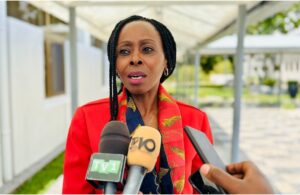
According to Minister Christine Nkulikiyinka, new laws and regulations are expected to be in place by the fourth quarter of 2026. These will expand pension coverage to all categories of workers, including those who earn irregularly or seasonally.
“It is planned that by the fourth quarter of 2026, new laws and regulations will have been established to expand the pension programme so that it reaches all categories of workers,” the Minister told the Senate Committee on Social Affairs on October 20, 2025.
Why artists are being included
Under the current pension law, registration and contribution to social security are designed for formal employees who earn monthly salaries. This system makes it difficult for artists and other freelancers, who often work on short contracts or irregular projects, to participate.
For example, a musician who performs only three or four concerts per year may not be able to make consistent monthly contributions. Similarly, painters or actors who depend on sporadic projects cannot fit easily into the existing model.
Officials say this is one of the key gaps the upcoming reforms aim to close. By designing a more flexible contribution system, artists will be able to make payments based on their income flow — for example, after each event, sale, or performance — rather than monthly deductions.
Informal workers make up about 90 percent of Rwanda’s total workforce. Most of them do not have formal contracts or regular employers who can deduct social security contributions on their behalf.
As a result, millions of Rwandans, including those working in creative industries, are left without a safety net when they retire, fall sick, or face accidents at work.
Minister Nkulikiyinka said her Ministry is currently holding consultations with stakeholders to understand the unique challenges faced by informal workers, including artists, in order to design suitable pension and insurance models.
“The goal is to ensure that every working Rwandan, regardless of their employment type, has access to social protection and can live a dignified life after retirement,” she said.
Currently, registration for the RSSB medical insurance scheme (RAMA) requires private employers to have at least seven employees. This rule automatically excludes small businesses and independent workers such as solo artists or self-employed creatives.
Moreover, the current pension system expects monthly contributions, which do not match the reality of irregular income patterns.
Labour officials also highlighted other issues affecting informal workers — including lack of written contracts and delayed payments — which make it hard to enforce workers’ rights and ensure consistent contributions to social security.
Proposed reforms
The Ministry plans to introduce several measures that will simplify participation for informal workers:
-
Flexible contribution schedules: Allowing individuals to contribute at their convenience, based on income events instead of fixed monthly dates.
-
Digital payment options: Enabling artists and freelancers to register and contribute via mobile phones, without needing to visit RSSB offices.
-
Group or cooperative registration: Encouraging artists’ unions, creative associations, or cooperatives to collectively register members for pension coverage.
-
Lowering enrolment thresholds: Revising the requirement that employers must have at least seven employees to join the medical insurance scheme, so that even small creative groups can benefit.
These reforms are designed to make social protection accessible to people who currently work outside formal employment systems.
Senator Adrie Umuhire, Chairperson of the Senate Committee on Social Affairs and Human Rights, welcomed the proposed reforms and urged informal workers — especially artists — to begin saving and preparing for their retirement now.
“Every person, including artists and freelancers, should prepare for retirement early through savings and social security contributions while they are still earning,” she said.
She emphasized that preparing for old age should not depend on government aid but on a culture of saving and personal responsibility.
“These reforms aim to ensure that all elderly citizens live dignified lives and are not left dependent on government support,” she added.
For many artists, the idea of contributing to pension schemes may seem unrealistic, especially when income is unpredictable. However, experts argue that this is precisely why social protection is necessary.
A flexible pension plan can act as a safety net during periods of low income or unemployment, while also providing long-term security for retirement.
In addition, joining a registered pension or insurance scheme allows artists to access other financial services such as loans, savings accounts, and grants, which require proof of regular contribution or formal income documentation.
Senator Umuhire also encouraged payment through financial institutions, explaining that it increases transparency and opens opportunities for artists to access credit or investment support.
The review of these laws aligns with Rwanda’s broader goal of achieving universal social protection coverage. This vision seeks to ensure that every worker — whether formal or informal — has access to benefits like health insurance, pension savings, maternity leave, and occupational hazard coverage.
By 2026, Rwanda hopes to have in place a modern, inclusive legal framework that reflects the country’s growing creative economy and expanding informal sector.
As the government moves toward revising pension and social insurance laws, artists are being called upon to take the lead in securing their own futures.
The upcoming reforms are expected to make it easier for them to register, contribute flexibly, and enjoy the same protection as other workers.
In the words of one labour official:
“No matter what kind of work you do whether you are on stage, in a workshop, or selling art on the street — you deserve dignity and protection in retirement.”